Showing posts with label herstory. Show all posts

13 February 2015

Friday is the (Inspirational) Movie Night: The Magdalene Sisters (2002)

#inspirationalmovies

There is no particular reason why I'm offering a mini-cycle on women and catholicism. That's how they've constellated in my to-publish list. No excuses.

The Magdalene Sisters (2002, Peter Mullan) unearths the horrifying tale of Irish Magdalene laundries well into XX century. This is one of those religion-tries-to-deal-with-human-sexuality tales that makes your hair stand up.

Want a recipe for complete disaster of human wellbeing? Organize a society where a group devoted to the belief that human sexuality is impure and sinful (and legitimized only by procreation inside the wedlock) has a lot of power. Then - making a reference to an old book of tribal myths from 2000 years ago - decide that only one half of each heterosexual couple is to bear the burden of stigma attached to "improper" sexual behaviour: the woman. Sum to that a parallel belief that sins can be paid of by hard work and being miserable. And then a sinister idea that there actually might be a profit to be made of the hard work of the sinners confined to closed spaces and completely controlled by (people pretending to be) religious fanatics.

That's the ugly story of the Magdalene laundries in a nutshell: "fallen" women disowned by their families and exploited by catholic orders... Watch the movie, do an advanced google search, read some books and/or articles on this very disgraceful page of catholic church! At least you'll know the dark side of the all-the-charity-work-the-religion-has-been-doing-for-women discourse.

The impact that the trauma had on the lives of those that managed to survive that living hell? I'll tell you next week which movie to watch for that bit of information... But you can start by reading this.

03 October 2014

Friday is the (Inspirational) Movie Night: Dinner at Eight (1933)

#herstory


This one is educational instead of inspirational, be warned. Dinner at Eight (1933, George Cukor) is a manners comedy/drama and - despite having a marvelous ensemble of expressive actresses - not a feminist masterpiece. Nevertheless, it very clearly depicts the role of soft power that women have been relegated to in many times and places throughout the history, especially when separating her power inside the family and the expected persona of a sweet and demure wifey in public.

The cast does the job perfectly and - when everybody meets at the dinner table at eight, perfectly dressed and perfumed - almost none of the scheming and moving is visible.
Even more, the anxiety of the wives to influence and assure success (social and/or economic) is also to be understood in light of the realization that the husbands and their luck in business is all they have. Because, yes, you guessed right: it was believed to be unwomanly to work for a wage if that was avoidable. Think of the stress of being completely dependent and - supposedly - with no voting rights regarding the family finances! That's why Dinner at Eight ladies do their little secret planning and negotiations.

+ You get the adorable Jean Harlow as a very ambitious social climber! Power to her!

To remind that the ethos of scheming behind the partner's back in the family still hasn't died even in postindustrial societies, see, for example, My Big Fat Greek Wedding (2002):

15 August 2014

Friday is the (Inspirational) Movie Night: Frida (2002)

#inspirationalmovies


There are many reasons to be obsessed with Frida Khalo. Her paintings, her life story, her activism, her style, her resilience... Frida (2002, Julie Taymor) offers a taste for all of it. It's a high-budget Hollywood interpretation, of course, and bound to be an interpretation after what's known about her life and what can be seen in her paintings through the prism of the director and many other people. And through the Frida Kahlo myth too, of course.

Nevertheless there are certain aspects of her life that are very clear.
  • The use of personal, painful, often gendered experiences in creative expression, working through and with them (very similarly as Sylvia Plath, by the way). 
  • The courage to embrace her roots and go beyond them at the same time. Her way of both painting and dress is clearly based on Mexican imagery, but then she takes it a step farther and makes it her very own.
  • The wish to follow her desires, to act upon them. While this is not supposed to be always easy, there's no doubt that Frida's journey was an authentic one.  
Etc, etc... the internets are full of people - including us, of course - swooning over Frida's work and icon that the popular culture has turned her. Go, read some! But, whatever you read, keep in mind that, as somebody on tumblr said:
"Frida Kahlo was a disabled politically active woman of color who deliberately fucked with gender roles and don’t you ever forget it."

P.S. For the dessert, here's the story on her dresses: 1, 2.

01 August 2014

Friday is the (Inspirational) Movie Night: Sylvia Plath movies

#inspirationalmovie

This is a tragic story. We've warned you. But it's also essential for your herstory knowledge and a very good way to empathize with the problematic of The Feminine Mystique, to understand the great drama of those women educated (therefore craving stimulus and self-realization) but confined to running a household and suffering whatever comes in order to keep up the appearances and keep the family together*.

We offer a double feature about the poet Sylvia Plath (1932-1963). Open her wikipedia page, scan through it, then start with the movie version of her acclaimed semi-autobiographical novel The Bell Jar (1963) - The Bell Jar (1979, Larry Peerce). A coming-of-age story gone sour is just what you need to observe the moment when the idealism and ambition (to become a renowned poet) clashes with the adult world. In this case the adult world implies dumbing things down for the audience of a women's magazine, men that think people owe them sex, fear of pregnancy, fear of the future, invasive and traumatic psychiatric treatment, the desire to disappear...

The novel is based on the experience Plath had while doing an internship in a New York magazine and her consecutive mental breakdown. A version about that summer in Sylvia's life can be read in Pain, Parties, Work: Sylvia Plath in New York, Summer 1953.


Then go on with Sylvia (2003, Christine Jeffs) covering Plath's career after the recovery, relationship with Ted Hughes, and suicide at the age of 30. While putting no stigma on Sylvia's history of mental health issues, the movie charts the path from poetry and love, through the hell of betrayal, inability to create and utter abandonment, back to writing from the darkest places of her experience and moving generations of people with the sheer force of her suffering. 

The relationship dynamics are pretty much the same as depicted in Hemingway & Gellhorn (2012) - full of the struggle to create, to get out of the shadow of a celebrity-partner and deal with their ego - just more intense and with a tragic ending.


* Here it is about running a household instead of doing anything else as a consequence of social norms requiring it (while offering almost no alternatives, and demanding that you become a wife and a mother primarily even if you are a great poet, scientist, dancer, doctor...). It is obviously not the same as being able to decide to dedicate yourself to caring because that's what resonates with your most authentic self.

16 July 2014

Inspirational women taking pictures

A 19th century photographer, found on Pinterest.

Instead of talking again and again of how women are so often objectified by media and the popular culture, let's look at women who have literally objectified others and made art out of it. This is a mini compilation that brings together some that dedicated their skill and film to capture conventional beauty for mainstream culture (and did it very well!) and some that observed the real life passing by, even shifted through the darker aspects of the reality.

Regina Relang (1906-1989) was an artist and a self taught photographer from Munich, Germany. She began working for Vogue in 1938 and became one of the leading German fashion photographers in the 50's and 60's.


Diane Arbus (1923-1971) was a photographer that went from a family commercial fashion photography business to a full-fledged passion for the weird, the raw, the hidden.  A version of her artistic journey is developed in Fur: An Imaginary Portrait of Diane Arbus.


Karen Radkai was a freelance photographer that worked primarily for Vogue in the 50s and 60s. Internets know little more about her, but offer her work though.


Vivian Maier (1926-2009) was a nanny who lived in Chicago for most of her life and passed away in 2009 at the age of 83. Little more is known about her, except that she was an avid street photographer. Her work was discovered at an auction in 2007, more than 100,000 negatives and undeveloped rolls of film, sold by a storage facility who were cleaning out her locker for delinquent rent. Cannot wait to get my hands on the documentary that tells more about this thrilling discovery.


Annie Leibovitz (1949) an American portrait photographer, doing mostly very glossy celebrity photos. Many of them very good and already iconic, though.


11 July 2014

Friday is the (Inspirational) Movie Night: Cosmos: A Spacetime Odyssey (2014)

#inspirationalmovies


Cha-chan! Here you have a series (well, 13 times 44 minutes) that are breathtakingly inspirational on several levels: Cosmos: A Spacetime Odyssey (2014). It's a work of many people, including the antifeminist-but-rich-enough-to-fund-science-communication-projects Seth MacFarlane and the amazing Ann Druyan and Neil deGrasse Tyson. Love for science and Carl Sagan has already been expressed on this blog, so now we just have to convince about the added extras that the new Cosmos includes.

Verónica Bayetti Flores has already done that in her Feministing.com article Five times Cosmos’ Neil deGrasse Tyson stole my feminist heart that captures very well how at times the new Cosmos goes even further than the Carl Sagan's one in criticizing the harm that we humans do to each other and other species. Some of the obstacles in our way to well-being and harmony that Cosmos identifies are lack of knowledge, of course, but also the predatory capitalism, religious dogmatism, human pettiness and the structurally discriminating hierarchies of knowledge that have left and keeps leaving behind many people... including women, of course. This Cosmos does introduce you to many females science pioneers you had no idea about. Plus, the discrimination and ridicule suffered by them is also very clear. And the determination and lucky circumstances needed to succeed in the men's world that science was is.

Among others, you'll get to know Ms. Annie Jump Cannon, Ms. Henrietta Swan Leavitt, Ms. Cecilia Payne-Gaposchkin, Ms. Marie Tharp. And there are so much more of them! For more inspiration (for a Wikipedia research, at least), look at the poster they're selling at A Mighty Girl.


And just for the dessert, Neil's response to the question on gender bias in science (from 1:01:31 in the video, although you might also enjoy the rest of it). So we know that he's with us...


03 March 2013

Sunday is for horizons: Makers (2013)

#Feminism #MakersChat #InspirationalMovies


Again, a #SundayIsForHorizons slightly out of what it was conceived to be. Perfect and extremely educational, though. The three-hour PBS documentary Makers: Women Who Make America (2013) is a very well done account of the history of feminism and empowerment of women during the second half of the 20th century.

While there is some (rightful) criticism regarding the portrayal of the current movements among women and feminisms, this is a very solid work of documentation on how the feminism (the second wave, that is to say) we know as such started. Even if you are not that into women studies. Even if you are not that into the history of the U.S. Even if you don't identify as a feminist (ouch!)... these are things every person to some extent involved in the social movements, social justice, and living in a society should know this story of empowerment and enormous (although not as big as hoped for) success.

And while not a feature film as #InspirationalMovies tend to be, still full of very real testimonies and able to push for change (even if those are baby-steps and very basic awareness raising).

+ The greatest thing is that you can streamline it for free right now! All three episodes.
Go! Take notes and expand your role model list. And your reading list. Revolutionize your own life. Build a movement.

28 November 2012

IPPF ♥ for #IPPF60

#IPPF60 #SRHR


"IPPF started its journey in 1952, when 8 family planning associations joined together to fight for a cause.
60 years later and the organization is nearly 20 times larger. It works in 172 countries, delivers millions of services all over the world. And drives major changes in global policy.
Together, IPPF’s family makes up the largest sexual and reproductive health and rights organization in the world. None of this would have been achieved without the untiring efforts of IPPF’s staff and volunteers, and our partners in government, civil society and business.
There is so much the Federation can be proud of: it continues to improve the health of millions by contributing to health systems strengthening around the world. It provides services where no government facilities exist, it trains health workers, reacts rapidly in emergency situations and provides expertise that others can learn from."
LET'S EAT CAKE!

This is the cake that IPPF Western Hemisphere Region enjoyed!

10 November 2012

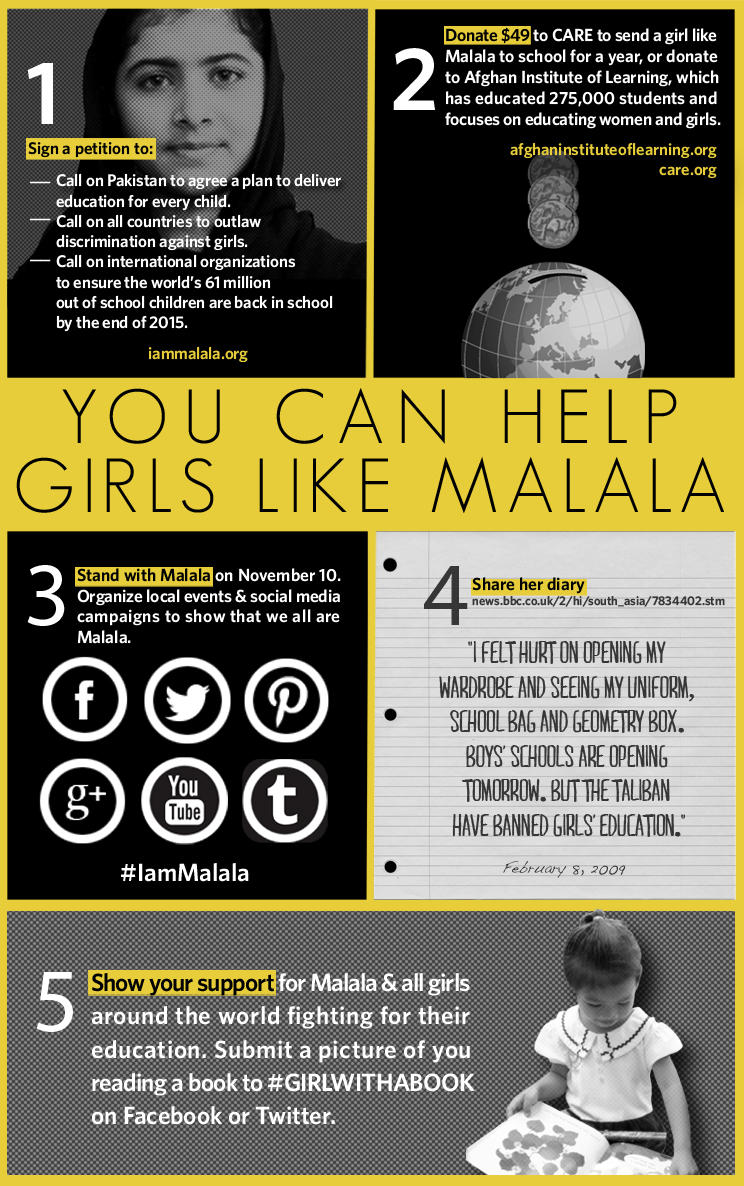
Right to Eduaction: Malala

#girlwithabook

We have been talking about education and books before but this is different.

Suddenly EVERYBODY is concerned about the fact that so many girls in the world are out of school. Aha, much more girls than boys. And you know, if both Madonna and the UN Secretary General are talking about the same issue at the same time, it's important.

And the reason is a girl. Malala Yousufzai (and bunch of Talibans but they are the really-really bad guys in the story) is the reason. And so is her resilience.

We are celebrating her and all the activists fighting for access to education. And we are doing this by joining the #girlwithabook initiative.

Intimate bibliophile portraits of you and some books can be a part of the movement for Universal Access to Education.
Get your camera and your favorite book... 3, 2, 1, say "Malala"! 

Source: @Half

26 October 2010

Girls & Books (Tove)


"I think every girl should read something by Jane Austen, preferably Pride and Prejudice first published in 1813. Jane writes about a time in English history when it was really difficult being a girl, everything was about finding man you could first and foremost marry for money so that he could support you. Still, in almost every book, the main character is a strong and powerful woman trying to be as independent as possible.

And when you've read the book, don't miss the BBC mini-series from 1995 with Jennifer Ehle and Colin Firth. :)"
Tove

+ Feel free to enjoy also quotes from works of wonderful Jane.

18 October 2010

Empowerment recipes (Stephanie)


"Maya Angelou once spoke of “how important it is to recognise and celebrate our heroes and she-roes”. It is the stories of inspirational people that empower me. Those women who stand up and fight for their rights and the rights of others; they are reproductive justice activists, writers, advocates, feminists, political activists, and trade union activists. Women throughout history such as Emma Goldman, Elvia Carrillo Puerto, Hanna Sheehy-Skeffington, Mairéad Farrell, Comandante Ramona, Eufrosina Cruz, Maire Drumm, Simone de Beauvoir, Rosemary Nelson, Rosa Parks…the list is endless, and their stories are both amazing and powerful.

However it is not only the stories of these people that are empowering. Empowerment also comes from the ordinary women of our communities who give sound advice, strength, solidarity and friendship. The women who listen, write and engage with others. The women who lead, collaborate, and advocate for others. The women who vote, protest, petition and march. The women who teach, educate, and learn. They are our mothers, daughters, grandmothers, sisters, friends, wives, girlfriends, partners, mentors and teachers.

And they are truly empowering."
Stephanie