11 July 2014

Friday is the (Inspirational) Movie Night: Cosmos: A Spacetime Odyssey (2014)

#inspirationalmovies


Cha-chan! Here you have a series (well, 13 times 44 minutes) that are breathtakingly inspirational on several levels: Cosmos: A Spacetime Odyssey (2014). It's a work of many people, including the antifeminist-but-rich-enough-to-fund-science-communication-projects Seth MacFarlane and the amazing Ann Druyan and Neil deGrasse Tyson. Love for science and Carl Sagan has already been expressed on this blog, so now we just have to convince about the added extras that the new Cosmos includes.

Verónica Bayetti Flores has already done that in her Feministing.com article Five times Cosmos’ Neil deGrasse Tyson stole my feminist heart that captures very well how at times the new Cosmos goes even further than the Carl Sagan's one in criticizing the harm that we humans do to each other and other species. Some of the obstacles in our way to well-being and harmony that Cosmos identifies are lack of knowledge, of course, but also the predatory capitalism, religious dogmatism, human pettiness and the structurally discriminating hierarchies of knowledge that have left and keeps leaving behind many people... including women, of course. This Cosmos does introduce you to many females science pioneers you had no idea about. Plus, the discrimination and ridicule suffered by them is also very clear. And the determination and lucky circumstances needed to succeed in the men's world that science was is.

Among others, you'll get to know Ms. Annie Jump Cannon, Ms. Henrietta Swan Leavitt, Ms. Cecilia Payne-Gaposchkin, Ms. Marie Tharp. And there are so much more of them! For more inspiration (for a Wikipedia research, at least), look at the poster they're selling at A Mighty Girl.


And just for the dessert, Neil's response to the question on gender bias in science (from 1:01:31 in the video, although you might also enjoy the rest of it). So we know that he's with us...


06 July 2014

Working Group


Hello lovely people,

                  
Since 2005, YSAFE (Youth Sexual Awareness for Europe) has become a visible youth network working in the field of SRHR in Europe and Central Asia. YSAFE members are active on national, regional and global levels.


I <3 being a girl was the first project of YSAFE, funded by the ‘Girls Decide’ initiative of IPPF 2010.


Now we would like to establish a Working Group to activate the blog a bit more.


If you are a YSAFE-member and interested to become a part of the Working Group, please contact our YSAFE coordinator Ivy Miltiadou (imiltiadou@ippfen.org)


05 July 2014

Thinking bit: Bodies (the summer edition)


Again and again... We are bombarded with images of unattainable beauty standards and quite toxic ideas of beauty all day long. And just time by time somebody comes along and offers a (at least slightly) different message.

Meghan does not go as far as I'd like, though. There's still the wish to cash in on antagonizing skinny vs. curvy, implying that there's something wrong with being slim, using dancers of color as props, the fact that she is still conventionally pretty just bigger, and the pastel colors may just not be for you... But well, it's a pop video! Every little step towards a more diverse body-scene out there is welcome.

The tag line - Every inch of you is perfect, from the bottom to the top! - can, of course, be criticized due to the fact that it is exactly the pursuit of unattainable perfection that keeps many of us down, that the real win here would actually be accepting that each body is different and be happy and loving with the one you've got.

But take for what it is - a bouncy summery pop song - that may be just right for the moment when you decide to stop worrying and complaining about the body you live in. The moment to put on something you feel comfortable in and that's adequate for the temperature out there and have fun. Yes, with bikinis*, shorts, ice cream, and all of that jazz!

 * A great source of fatkini inspiration can be found reading Virgie Tovar and GabiFresh.
All bodies = bikini bodies. Have a swimsuit and a body? Put one on the other. Voilà, enjoy!

04 July 2014

Friday is the (Inspirational) Movie Night: Her (2013)

#inspirationalmovies  

There's (at least) two ways to interpret and watch Her (2013, Spike Jonze). The first one would be the anthropocentric obvious approach: for two hours your screen is filled with Joaquin Phoenix living a quite lonely life and experimenting with the first operating system with artificial intelligence. A bittersweet futuristic story for everybody concerned about the ways we use technology and build our lives around it.

But then there's the other side. A much more entangled and complex side. If you look closely enough  - as with everything, we all consume culture in an interested and biased way, not necessarily seeing and hearing the same message - there's a lot to be taken away from it. There's a whole conundrum of issues on body-ness (although in this case it's not about type of body but about absolute lack of it), on inequalities in relationship (imagine being with someone so much more intellectually capable that you cannot even imagine how they do the things that they do), on what having sex means, on jealousy and on wishing to be assured that our beloved are ours, on being with somebody very different than you are... and on what is to be considered a happy ending.

People at Feministing have had a lengthy conversation on this, claiming Her to be the most feminist film of 2013. Here's a quote just to entice you to both see the movie and read the whole thing, and in this order preferably.

"I’m a proud cyborg feminist, and part of what the means for me is that to be the authors of our own embodiment means thinking about technology as expanding what it means to be “real” rather than the ultimate artificiality. Samantha is a real person– and the fact that the very premise of the Slate article hinges on the fact that she isn’t really troubled me. Her resounding “fuck you!” to Theodore when he waxed insecure about Samantha’s personhood was a strikingly feminist moment, a cyborg-feminist one even, and one that ought to dispel most doubts in the viewer about her sapience.
I was also worried in the first half of the movie that Samantha would feel permanently inferior because she lacked a traditional human body; imagine my transhumanist heart soaring when she realized that her data-based corporeality was not only just as good as, say, Theodore’s body, but perhaps even better. It’s redolent of the way that people with body stigmas–be they trans, fat, PWD, or people of color–come to recognize our own inherent beauty and transcend the hegemony of, say, white/cis/thin beauty norms."  

27 June 2014

Friday is the (Inspirational) Movie Night: Frozen (2013)

#inspirationalmovies


OK, so this is long time overdue. I was sure that this one has already be shared... but, no. So, here you have the icy (think of a sorbet!) treat for every season: Disney's Frozen (2013, Chris Buck & Jennifer Lee)!

So, why Frozen is better then the classical Disney princess stuff (think Cinderella)?
Two complex female protagonists. Some superpowers that need to be explored and dominated. The true love that breaks all the spells is not what you were taught it was. And *possible spoiler* the handsome prince is not the solution for all ills, quite the contrary.  

Why is Frozen as good as any other Disney's classical (think The Lion King)?
It's fun for all ages, has great music, celebrates friendship, loyalty, and family.

Why is Frozen equally un-perfect as all the princess-centered child culture is?
While the plot is quite solidly empowering, the way the movie is drawn and was marketed reveals the same bias that female characters suffer in both animated and other entertainment areas. Read more here, here, here, here, here, and here.

With that in mind (and trying to ignore that somehow the heroines are so much smaller than the heroes and so barbie-like shaped), relax, get cozy and finally watch Frozen. Or watch it again.
Then get the soundtrack and sing along to Idina Menzel at moments when you have to let it go.

20 June 2014

Friday is the (Inspirational) Movie Night: Bringing Up Baby (1938)

#inspirationalmovies

This is a very good one and very bad one at the same time. Weird, I know, but hang in there with me.

Bringing Up Baby (1938, Howard Hawks) is an old fashion comedy-romance with continuous silliness that ends with a happy finale. An almost Shakespearian comedy/mess, if you may. Entertaining, anachronic, and not much feministing to be expected here.

I warn you that most of the movie does point at humans in general - the protagonist very much so - as hapless and ridiculous creatures, unable to communicate among themselves. The most amazing Katharine Hepburn is obliged to go through a series of weird adventures and lots of banter, some of it very witty, some of it very obnoxious... and most of the mess is just because of a romantic whim of hers!

And that's exactly what's so powerful about this classic: the protagonist is a breathtaking, impulsive and clumsy girl that follows her hunches and just really wants to be with Carry Grant timid (and also clumsy) doctor Huxley. She does most extraordinary things and goes places because she has decided that she wants to be with this man. And she's so sharp and witty (so is her aunt, just to add intriguing female characters).

The same relationship dynamics could be very toxic indeed, but not in this case. She's the natural force that brings the dry scientist out of his shell and he (secretly) likes it.
Relax and enjoy, but do not try these tactics at home, at least not to the same extent!


*And the very final (no surprises there, though)!*

18 April 2014

Friday is the (Inspirational) Movie Night: Girl Superheroines II

#inspirationalmovies 

What do Mindy Macready alias Hit-Girl and Buttercup, Bubbles and Blossom do when they grow up?

According to Pixar, they marry another superhero, move to suburbia and make babies, truing to fake it and be normal (what an awful idea, you have to admit!).
Obviously, the world happens to be in peril again, and again, and again... and the family of superheroes has to balance superheroism and family life. That's the outset of The Incredibles (2004, Brad Bird), the movie trying to merge family comedy and superhero movie.

As we concluded in the first installment about superheroines here, it's a tricky genre and feminist perfection does not abound. So this is no Brave (2012) either. But we can still get some out of this:

1. (After some lies and deceit) we finally have a super-couple doing stuff together.

2. Female agency, even if the whole movie is not dedicated to them (there's mum and daughter vs. dad and two sons balance, so 40% of the central cast).

3. Being a family movie, the superheroines are not oversexualized. Despite some gendered and soccer-mum stereotyping, this still could be much worse.

4. You get the Ah!mazing Edna Mode as the super-fashion designer, and she on her own is worth watching the movie. For real. She's creative, loves challenges, is not impressed by supermodels and fashion weeks (some fat-shaming, though!), and her fashion is super-wearable and practical. Plus, being an independent professional and having all the nonchalance in the world! Adorable.

(Now imagine a movie where Edna would work with the Powerpuff Girls! Uh! Oh!)


11 April 2014

Friday is the (Inspirational) Movie Night: Roman Holiday (1953)

#inspirationalmovie

Let's celebrate the spring with something light yet inspirational. Traditional yet empowering. Here you have the emancipated Audrey Hepburn in Roman Holiday (1953, William Wyler)! 

While you could reduce the story to a romantic comedy of a girl raised among restrictions falling in love for Gregory Peck, we prefer to go farther and suggest you watch this as a story of a girl that:

- Has a social standing and responsibilities that do not depend upon a man. Although monarchical, that still counts as rather emancipatory feature.
- Decides to break free and have fun!
- Realizes she needs guidance and therefore asks (and purchases) assistance.
- Falls in love and enjoys it.
- (A spoiler, but you should know it by now!) Decides her before-mentioned responsibilities are more important than a love affair, and therefore chooses to resume doing them (and let go of Gregory Peck).

A synopsis: she chooses to have few days off from all the stress and stiffness, has great fun and a romantic adventure, then takes a decision to go back to her professional life (being a princess is a professional duty, albeit a very particular one) and acts upon that.
Here you go, Roman Holiday is an emancipatory piece of movie-making! You are welcome. 

04 April 2014

Friday is the (Inspirational) Movie Night: Tomboy (2011)

#inspirationalmovies


It may be very difficult for older people to admit, but the life of young - and very young - can be extremely complex. Classical literature is full of examples, but today's one is a recent French cinema gem.

Tomboy (2011, Céline Sciamma) offers a moving story about trying to fit in better in your own body while living in an extremely gendered world.

It will (well, it could, if you'll let it) get you thinking about:
- How little external appearance tells you about people. And how - at the same time - you should respect the signals people are sending. Even if that takes you into an uncharted territory (even beyond gender binary, uh oh).
- How much inner drama and struggle is brought up when you realize that you should make serious adjustments in order to fit in. Especially if you feel that you cannot share that with anybody. Especially if people assume that you are too young to have any coherent idea about what's going on.
- How beyond the "oh, children are so cruel" stands nothing more than the boxed thinking of the adults transmitting certain notions. You cannot expect little children - those people still just ordering basic ideas about human life - to question and bend the old toxic ideas right away. Adults should lead by example.

It's bittersweet, short, and very touching. What else do you need?

28 March 2014

Friday is the (Inspirational) Movie Night: Gay men in homophobic cultures

#inspirationalmovies


While these are not an obvious part of our repertoire, they still make sense to be watched from a feminist and I Being a Girl perspective. Even though cis-men are at the center of these movies, and women is only a backdrop for their drama and passion, it still emanates from no other place than patriarchy and the obsession with controlling the sexual and amorous lives of people.

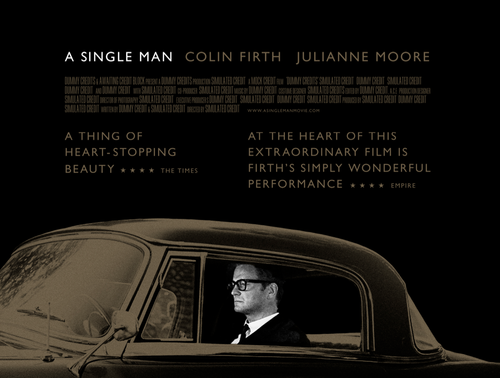
So, today's offer is two movies that look into the lives of gay men in culturally very restrictive contexts: A Single Man (2009, Tom Ford) and Eyes Wide Open (2009, Haim Tabakman). Set in two very different but undoubtedly socially controlling places - 1960's USA and nowadays Israel among the Orthodox Jews - both of them tell the dramatic tale of how even male privilege won't save you if you transgress the code of sexual morality.

Of, course there are differences. The aesthetics, trying to be true to time and place depicted, are very different. Eyes Wide Open adds a religious restriction where A Single Man deals with a more secular type of institutionalized homophobia. It is loss of a loved one when you are not really allowed to mourn vs. the discovery of lust where it's strictly forbidden and harshly punished. Nevertheless, the main theme is the social pressure to negate ones real desires and feelings in order to keep up with what's esteemed to be proper and moral. And what that does to people.

One of the lesbian versions of the same story would be Fire (1996, Deepa Mehta), already covered before here