Showing posts with label gendered experiences. Show all posts

07 November 2014

Friday is the (Inspirational) Movie Night: Hanna (2011)

#inspirationalmovies


Hold on to your chairs... because here you have a quite classical thriller centered around a girl. Hanna (2011) is a weird story, no doubt. And I'm perfectly fine with debating - as in the case of Beasts of the Southern Wild (2012) - if being raised in a way that's alternative to the great majority and puts children in harms way is child abuse. Probably it is. But then again, raising a child on just Cartoon Network and candy could be considered very limiting and severely suboptimal too. Also, Hanna is 16 instead of 6-year-old Hushpuppy. Evolving capacities, people, evolving capacities. And a rather sci-fi narrative. Let's focus on the particular piece of fiction then.

It's eerie to watch it. Especially if you are sensitive to cinematographic violence. And it makes you question social conventions around the way we socialize our children, teaching them what's acceptable and what's not. Completely arbitrary sets of values, of course.

Also, by showing a quite rare narrative (Luc Besson's La Femme Nikita (1990) and Léon: The Professional (1994) come quite close, though), forces you to realize how internalized in this culture are the idea that violence is something that only adult men do. It's weird and doesn't feel right to see the dreamy Saoirse Ronan killing animals and people. It takes a movie like this to get hit by the hard truth that the violence is heavily gendered. Culturally obvious, but tricky still.

A little bonus just for you: the haunting Hanna's theme. You are welcome!

25 September 2014

Thinking bit: the Empowering Advertisement, the oxymoron


Depending on where you live and what media you consume, you may have seen more or less of this rather confusing genre of advertisement. But they are all over the social media the next day causing a debate among allies over their pros and cons...

Below you can find three examples that came out quite recently and can serve as good enough illustrations to the puzzle that they are.

+ They call attention on a topic - how gendering character traits, hobbies, and professions hurt people (and knowledge driven societies) - to audiences that never venture to read the latest outrage in the feminist blogosphere. Therefore, much good may be had if viewing such an ad would lead to a reconsideration of the behavior of parents, teachers, etc.

- They serve to sell the products, obviously. And even in this very small sample the relevance of the products varies greatly. All menstrual hygiene products  - no matter the brand, the type, or even if they are industrially made (see this great practice from Nepal) - are crucial for women to be able to get out of the house and lead an active and participatory life (google "dignity packs" for this).
Still, it's mostly Always toying with what it means to be girly without ever linking it to the product. Then the shampoo and shiny hair would still actually playing into the "be (even more) perfect (with our product) (because people may discriminate you less if your hair is shiny)" dynamics. And then Verizon who tries to get you to buy their wireless because they are concerned about the proportion of women in STEM. Slightly confusing. I'm all for corporate responsibility, but I don't need corporations telling me the status quo of the structural discrimination of women.
The action - apart from better perception of the products - that they offer are "inspire more kids to get involved with STEM" and "ban bossy [from your vocabulary as an adult qualifying the behavior of girls]". Nice, but far from revolutionary. And nothing for the already grown-up shampoo users, from what I gather.

- If they invert the traditional, discriminatory narrative, telling us - once again - that all the stakes are against them, the this is a stereotype ridden world where you will be called either girly or bossy, pushy, vain, and pretty over smart or brilliant. Much more emphasis put on that instead of alternatives. Not fun. At all.

- There are accuracy gaps. The truth is not all rosy, of course, but there are ways how - without inventing stuff - all these ads could've been made using a positive narrative of different femininities, different ideas of success (including interest for science, leadership roles, and careers in STEM for those passionate in that direction) instead of clashing traditional feminine with traditional masculine, insisting that the traditional masculine is much more valuable and perceived as more valuable... and promising an eternal fight (and frustration) for equality. Thank you very much, I already get that from the news!

+ On the other hand, provided that we live bombarded by advertisments, most of them extremely toxic and sexist, I much prefer any of the below than any disgusting Snickers BS on the "natural" sexism of a well eaten builder.


25 July 2014

Friday is the (Inspirational) Movie Night: Fake Orgasm (2010)

#inspirationalmovies


While normally we do not mind spoilers (assuming that analysis = spoiler), this is an exception. Click "play" and watch this 2010 documentary on conceptual/performance artist Lazlo Pearlman. The title Fake Orgasm refers to one of his performance which included a fake orgasm competition... but that's just the beginning as he goes much farther exploring and demolishing the notions of gender, heteronormativity, gendered expectations in the bed and out of it.

If you are already familiar enough with the notion that gender binary is an anachronistic concept, this won't be that surprising, of course. But it can still give you ideas about possible work in bringing this message to other (unsuspecting) people and breaking down the cages that social constructs like this may be for people.  

There are some moments of Spanish spoken with no translation in this version, but you should be able to manage through it. All the crucial narrative is in English.

27 June 2014

Friday is the (Inspirational) Movie Night: Frozen (2013)

#inspirationalmovies


OK, so this is long time overdue. I was sure that this one has already be shared... but, no. So, here you have the icy (think of a sorbet!) treat for every season: Disney's Frozen (2013, Chris Buck & Jennifer Lee)!

So, why Frozen is better then the classical Disney princess stuff (think Cinderella)?
Two complex female protagonists. Some superpowers that need to be explored and dominated. The true love that breaks all the spells is not what you were taught it was. And *possible spoiler* the handsome prince is not the solution for all ills, quite the contrary.  

Why is Frozen as good as any other Disney's classical (think The Lion King)?
It's fun for all ages, has great music, celebrates friendship, loyalty, and family.

Why is Frozen equally un-perfect as all the princess-centered child culture is?
While the plot is quite solidly empowering, the way the movie is drawn and was marketed reveals the same bias that female characters suffer in both animated and other entertainment areas. Read more here, here, here, here, here, and here.

With that in mind (and trying to ignore that somehow the heroines are so much smaller than the heroes and so barbie-like shaped), relax, get cozy and finally watch Frozen. Or watch it again.
Then get the soundtrack and sing along to Idina Menzel at moments when you have to let it go.

04 April 2014

Friday is the (Inspirational) Movie Night: Tomboy (2011)

#inspirationalmovies


It may be very difficult for older people to admit, but the life of young - and very young - can be extremely complex. Classical literature is full of examples, but today's one is a recent French cinema gem.

Tomboy (2011, Céline Sciamma) offers a moving story about trying to fit in better in your own body while living in an extremely gendered world.

It will (well, it could, if you'll let it) get you thinking about:
- How little external appearance tells you about people. And how - at the same time - you should respect the signals people are sending. Even if that takes you into an uncharted territory (even beyond gender binary, uh oh).
- How much inner drama and struggle is brought up when you realize that you should make serious adjustments in order to fit in. Especially if you feel that you cannot share that with anybody. Especially if people assume that you are too young to have any coherent idea about what's going on.
- How beyond the "oh, children are so cruel" stands nothing more than the boxed thinking of the adults transmitting certain notions. You cannot expect little children - those people still just ordering basic ideas about human life - to question and bend the old toxic ideas right away. Adults should lead by example.

It's bittersweet, short, and very touching. What else do you need?

27 March 2014

Thinking bit: Strip the (beauty) pressure


Our very good friend Smaranda (the one most responsible for the Inspirations e-book ) suggested that we share this here, and we salute the tip-off!

So, what this experienced and professional lady named Tracey Spicer is suggesting is... yes, taking it off! And not in pole-dancing-will-empower-you way, no. Instead it's about acknowledging how much time women (and men to some extent, yes, but that's a lesser order of magnitude) spend preparing their exteriors before they go and do things. And how many more things you can do if you decide to dedicate your time to things that actually bring pleasure, knowledge, fun, whatever...

The empowerment recipe here: rethink your time spent on grooming, ask why you do what you do and is it worth it, and then reclaim a bit of your utterly human freedom by shedding the unnecessary.

26 July 2013

Friday is the (Inspirational) Movie Night: The Hours (2002)

#inspirationalmovies


The Hours (2002, Stephen Daldry) reflects the inner life of three very different women - one of the being Virginia Woolf - connected by Woolf's novel Mrs. Dalloway (1925). Based on Michael Cunnigham's eponymous novel, the plot revolves around the fragile nature of happiness and how, even when satisfaction is expected, is does not always come.

Other recurrent themes are the complexities of affective relationships (love is complex, you know), sexual orientation and ways to canalize it (especially in oppressive setting), femininity and gender roles.

Of course, the three lead actresses - Nicole Kidman, Meryl Streep and Julianne Moore - add value to the picture. Also, pay attention to the colours and to the beautiful, stream-like pace of the movie

12 July 2013

Friday is the (Inspirational) Movie Night: The Rocky Horror Picture Show (1975)

#inspirationalmovies


OK, this is cult. This is scandalous. This is classic. If you haven't seen The Rocky Horror Picture Show (1975, Jim Sharman), drop everything and get a copy!

If you thought that Shortbus (antother must movie for people in SRHR, mind you) was outrageous, this is even better. No graphic sex but an even more whimsical take on sex and sexuality. Gender fluidity, happily (pleasurably!) lost virginities, ditching the monogamy... all that in 1975 and in drag!

In case you saw The Perks of Being a Wallflower and didn't really get the performance part, this movie is what they were mimicking. Being part of the fandom, obviously.

+ The soundtrack is the best. Here, have a taste!

24 March 2013

Sunday is for Horizons: How to go to movies? The Bechdel test and so on.

#BechdelTest #movies #Sunday


Back to the conversations with popular culture that we are immersed into. One of your ways to chose culture to consume can be our inspirational movie suggestions, of course, but today we are offering an additional criteria.

OK, this is a practical advice column of in-case-you-didn't-know-this. So, meet Bechdel test, the idea that it just makes sense that in a cultural product there would be
   1) at least two women
   2) that talk to each other
   3) about something else than a love interest.

Sounds normal and easy? HAH! Not that easy. And we agree to Colin Stokes up there and the ladies in the comic below. Yes, you can find inspiration and role models in differently gendered characters than you identify (I have always wanted to be Yoda when I grow up, seriously). Yes, Bechdel test can lead you into weird paths (horror tends to be Bechdel test friendly, so is a lot of porn...).

It can still be a fun addition for not being able to consume the pop culture without questioning it. Aha, tiring, but be honest, you wouldn't want it in any other way.  
So, this movie list is a combination of bechdeltest.com and imdb.com evaluations. Assuming the accuracy of those, here you have good, fresh movies (7 and more in the scale of 10) that comply with the Bechdel test.

20 March 2013

Why so many videogame characters look like me, but I prefer to play with someone else, pt. III

(You may want to check out the part I and part II beforehand,)

"So, to sum up: there are different reasons why I intentionally deviate from the default model when playing videogames. First off, this has to do with identification. Most lead characters are white, muscular and above all: aggressive male. These characteristics shape the stereotypical ‘tough guy’ standard which features prominently in many video gaming adventures. To my taste, such ‘hypermasculinity’ – as if I were playing with a walking steroid – is not the type of hero I could recognize myself in nor want to play with, despite sharing a lot of overall features with this masculine and Caucasian default. On the contrary: I would prefer the more ‘in-depth’ characters that are known for their interesting stories or personality rather than their looks and so called ‘manliness’. Nah, I’d settle for someone that would act more like me instead of just matching some of my looks.

Secondly, even though colored male characters are seen more and more in videogames these days, they are still being a minority in regards to the white norm; not to mention the equally important underrepresentation of female models. And to make things worse: the women that do feature in such interactive adventures are too often limited to another cliché: that of the ‘sexy heroine’. Thus, despite that diversity in characters is slowly slipping through more and more, the options we as gamers get offered nowadays are still too damn restricted. And on a symbolic level, that means a lot, for the current sexist and racist standards reproduce the inherent message that certain roles are not ‘supposed’ to be played by characters with a specific gender or racial background. Representation is definitely an important factor in need of improvement. The easiest way to challenge the current harmful standard is by deviating from that norm whenever possible; to cherish the opportunity for change if the game offers even the smallest mode of ‘personalization’.

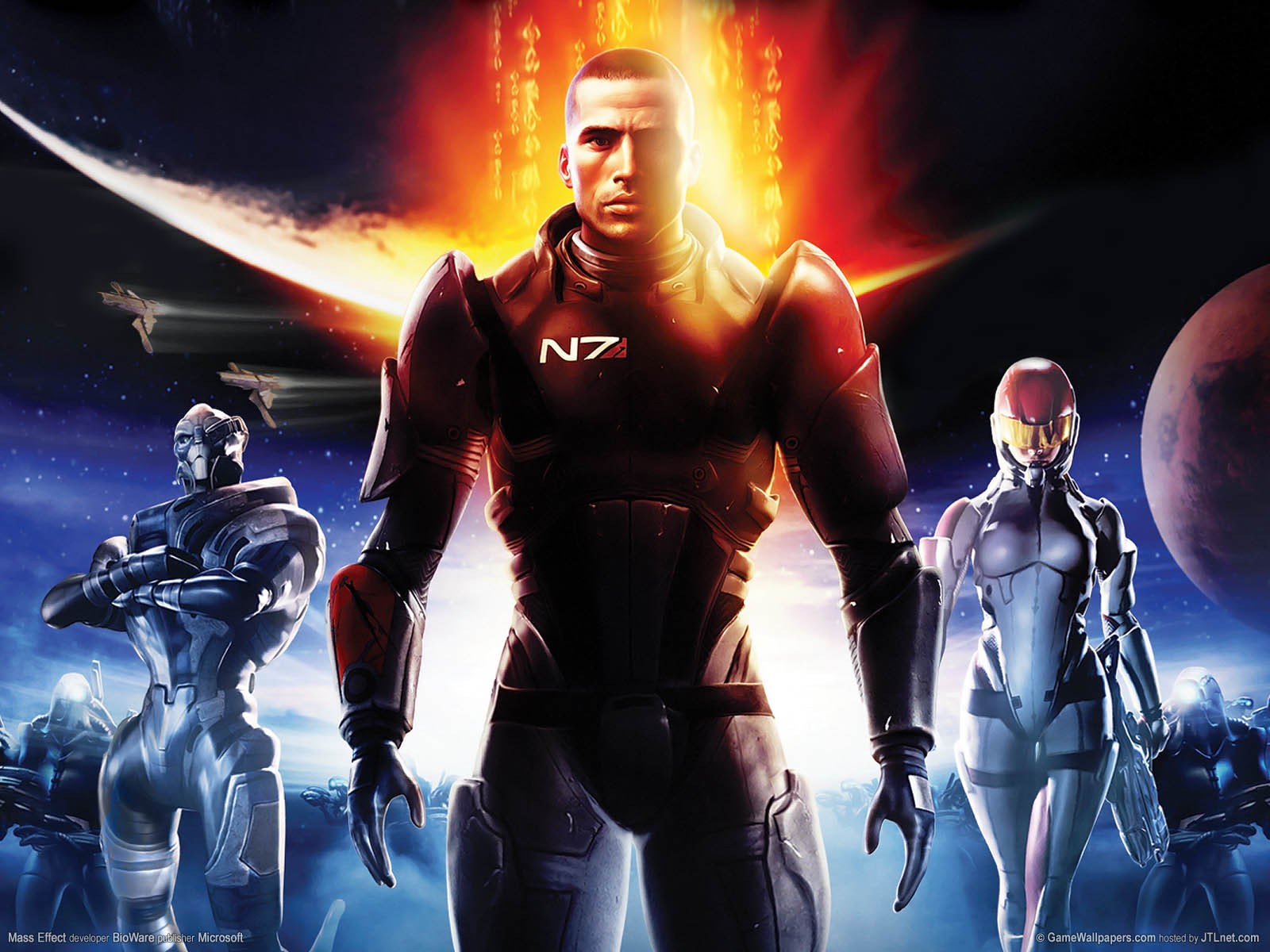
Thirdly, I choose variety in my gaming experiences merely for the sake of variety itself – to see what could *also* be a way to play an adventure. For instance, to grab back to the Mass Effect example: changing the gender of my hero(ine) goes hand in hand with switching to another voice actor, meaning that the story will be experienced differently, as each of two actors does a different job to it – despite having the same lines to perform. Both have their own style of adding life to the Shepard-character, for that is all voice acting is about. Furthermore, going with a different skin color and other bodily features than my own makes me, the gamer itself, look differently at the game as a whole. It makes me able to approach the adventure and interactions with other character ‘through a different lens’. Even though the voice acting will still be done by the same person that delivers the lines to the ‘white’ Shepard, throughout my whole 40-hour-long-gameplay do I get to look at and identify with a protagonist of color (if I chose one of the variations on this racial spectrum). Not only does this experience teach me that epic adventures are open to anyone and not just the Caucasian-looking ‘tough guy’ standard; it also makes me more susceptible to look at the racial background of the other non-playable characters in the game besides my own. ‘Becoming a character of color’ (instead of white, as is the norm) makes me question the lack of representation of colored characters in that game as a whole, as I constantly get reminded by ‘my’ looks what is otherwise not included or at least misrepresented. In other words: changing the racial identity or gender of the protagonist makes me aware of the privileges of playing with the ‘white guy’ model, as this is still the unquestioned standard in most games. Thus, by intentionally seeking more variety I get to think critically about my own position and how standardized ‘my own identities’ are, for now I become more alert of the ‘normative’ and the ‘deviant’; it makes me question why these are the norms in the first place.

Concluding: emphasizing variety in gender and racial identity is at this point still needed to show the structural lack thereof. Ironically, to ‘make aware’ that inclusion of all kinds of humans is still limited and no equal representation has been achieved yet, the current differences need to be pointed out exactly because of such existing lack - as it then becomes a sort of ‘in your face’-message. I know that I for one took a long time to realize that so many games I played were exclusively targeted at me and people like myself that fitted a limited gender- and racial-category. Because of having the privilege of being part of the norm I did not realize how alternatives to this sexist and racist standard are underrepresented. Therefore, by playing with different kinds of characters – different in many ways, not only in regards to gender or racial features – I hope to become better alert to able to speak out against such structural racism; as that is what lack of inclusion and underrepresentation is all about. And I can tell is that actively ‘adjusting’ my in-game looks hasn’t been a bad decision at all – rather the opposite. So I am expanding my gaming experiences by trying to identify with a different protagonist than the usual white ‘tough guy’ model, while at the same time seeing my own privileged identities in video game land being emphasized and therefore questioned? There seems to be no more enjoyable way to make me learn of the current sexist and racist standards in videogames and use this ‘experienced knowledge’ to share with other than by doing – by literally ‘gaming to differ’.

For as we have seen with the Mass Effect example: if only enough of the gamers themselves raise their voice and share their issues with the default norm, can change on a more individual level lead to improvement on a larger scale in the end. And that’s exactly why I deliberately choose to play with a character I am ‘not supposed to’: simply because I get to identify with a model that looks different from myself, I get made more aware of what is *also* among the possibilities that are not part of the privileged norms. Something which is beneficial to me as well, as that deliberate choice for variety is exactly what turns out to add more and more depth and pleasure to my videogame experiences compared to sticking to the default choices. Only by playing with a female heroine, character of color or choosing for the protagonist to develop a same-sex relationship, which would usually not be the standard option, does this underrepresentation and problem of non-inclusion get emphasized. Turns out I need to get ‘embedded’ with the minority identities in games to question my own prevalent privileges, for otherwise I would not have known. Now talk about irony." 

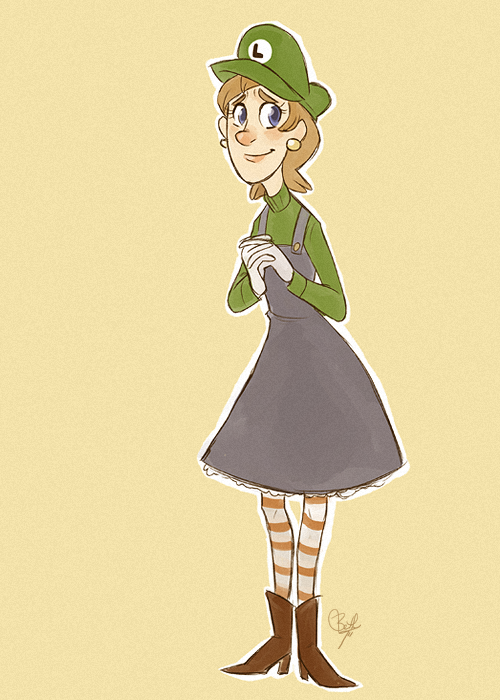
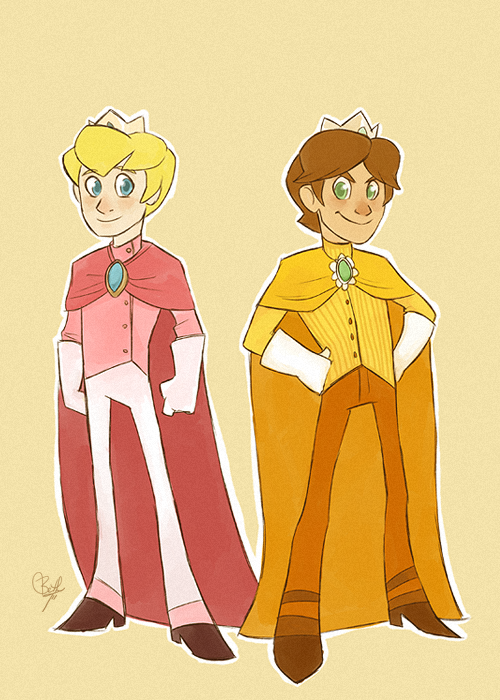
The genderswapped Super Mario characters are done by Rolling Rabbit, we found them too cute not to be posted as illustrations for this topic.

Daryo is one of those people that enjoys playing videogames and has a mind set at reflecting on things with 'feminist glasses' on, hence the love for Gender and Sexuality Studies.

19 March 2013

Why so many videogame characters look like me, but I prefer to play with someone else, pt. II

(Happily continuing from where we left it yesterday...)

"Well then, are all videogames like this, limiting you to play with this one-dimensional ‘tough guy’ type, both in ways of body shape and personality? Of course not; there are lots of games that do offer lead character of color, a female protagonist or any other personage that otherwise deviates from the limiting norm as mentioned above. It is not like no alternatives are offered ever at all. Nonetheless, adding more options to the pile of features doesn’t necessarily create more difference in gaming models. In contrast: this simply constitutes another norm, as the variety within the category ‘women’ in videogames is also a lacking issue. While the presence of their gender is already underrepresented, the female characters that do appear are often limited to one ‘type’ of body as well: that of the (usually) light skin color, ‘fit’ body shape and big – if not huge – overly present breasts. Furthermore, their role often seems to be limited to being a sexy sidekick or simply functioning as background decoration. Because of this, the main goal of their appearance in videogames seems to make them look sexy, rather than focusing on actual contribution to the story, such as through their personality, humor, in-game capabilities or combat experience, for instance.

Now of course, being sexy is not a bad thing per se, but the fact that so many female models are created along these limited lines does proof problematic, as it then becomes a matter of sexual objectification. Rather than being included in the adventure for, say, their tactical insights, witty personality or maybe even physical strength, many of these ‘sexualized’ women see their presence being reduced to providing visual pleasure. This gets even more emphasized by the clothes they are sometimes wearing, underscoring even more the uselessness of their ‘attractive’ appearance; as something not inherent to the story, yet overly present within videogames. Where most male characters are at least wearing comfy and protectful gear that makes sense considering the adventure they are heading towards – often a dangerous one - lots of female models are unnecessarily ‘stripped down’ and ‘sexed up’. Rather than getting armor that suits their needs, heroines commonly get provided with clothes that are primarily pointing out their bodily appearance rather than being fitted for the dangers they might be facing. If you’re wearing an armor that shows your naked legs and visible belly button, while at the same time emphasizing the size of your breasts, you are obviously not fit for an adventure on high heels against countless enemies trying to hurt you, right? Well, try to explain this to the many game developers then, as their games often suggest otherwise. Despite the illogic of this kind of dress within the setting of the game, lots of female characters are nonetheless portrayed in such a ‘senselessly’ sexualized way, insomuch as that this then becomes a whole other cliché on itself. Thus, while the norm of ‘maleness’ is being challenged by adding more female characters to the pile of protagonists in gaming, this has the ironic consequence of helping another limited and stereotypical norm into place: that of the ‘sexy heroine’ as an alternative to the ‘tough guy’. Once again, a one-dimensional portrayal of characters becomes the dominant standard. And all because that is what the game developers choose to display – rather than offering the options to deviate from these fixed models.

Then, what does it mean when a videogame does enable me to decide upon the looks of the protagonist? Well, quite a lot actually, for now I am provided with the ability to make my own choices; to be able to ‘own’ the gaming experience. Especially when the ‘default’ model is yet another copy of that ‘tough guy’ type or ‘sexy heroine’, I will, simply for the sake of variety, often deliberately choose to play with a character that deviates from these standards. More than once, I intentionally alter my gaming model’s gender, skin color, hairstyle, clothing or other features whenever such options are available. By doing so, my actions become an ‘act of resistance’, however small that may be. Rather than playing with that overly used ‘hypermasculine’ (and often white) default character, I try to add as much variety into my gaming experiences as possible. Having played with too many ‘male’ characters already? Then the next session I’ll choose another gender. Tired of seeing a white modeled hero in a lead role again? Time to go for a different skin color as of now. You see, being able to make such subtle choices on the looks and likes of the protagonist can make a big difference on how I would experience a videogame. Not only does such variety make one adventure contrast more to the other, it also breaks with the rigid notions that there can be only be one ‘sort’ of character for a certain type of game; it questions stereotypical thinking that links gender, ethnicity and body type among other features to the limited places where they supposedly ‘belong’. For example, adding more female characters to action games challenges the idea that heroines have no place in ‘dangerous’ adventures. Rather than regulating them to second-tier-roles, women could thus become a core-part of (action) games we well.

See my issues with the ‘fixed game models’ now? Being able to make my own choices enables me to break with racist, sexist and other restricting assumptions common in video game land. Even though I am, with all my choices, still bound to the options provided by the game developers, cherishing every opportunity (however small) that challenges the limited norms in videogames is a victory on itself. Maybe not so much in the eyes of everyone – the majority of the game developers are still white men and pre-dominantly target a male audience - but on a small scale, it can make a difference to the individual that does seek those alternatives. And maybe this is just a small step to the bigger change I am hoping for – that a little while from now ‘female’ models or ‘characters of color’ are not seen as additional features to the ‘tough guy standard’, but become an equal and worthy part of the world of video gaming as well. For there are games in which the ‘second option’ has become as popular as the ‘default model’ over time: one of my favorites being Mass Effect series, insomuch as that the final game in the trilogy made male and female characters starring the promotional videos. Not to mention that the female version of protagonist Shepard is dubbed ‘Femshep’ in popular culture; as being a whole different character on itself rather than just a twist to the masculine standard. Indeed, while the first part of the Mass Effect series started with the white and male default, the sequels developed in such a way that in the end the lead character Shepard was no longer exclusively promoted as single gendered. On top of that, the popular opinion goes that the voice acting for Femshep is genuinely better performed than that of the original ‘guy Shepard’ – ironically, the ‘alternative option’ being the superior of the two. Oh, and then there’s this addition to Mass Effect 3 in which same-sex relationships become fully optional; something which was lacking in the previous two parts for at least the male designed Shepard, but which changed after many fans condemned the series for not including such romances and sexual subplots.

Therefore, the above example shows how merely including an opportunity to change the looks and likes of our videogame characters can lead to a shift of norms on the long term – if only the players embrace this as a chance to show the developers the need for more such ‘personalization’. What we see here is the change of a popular game hero from initially the white Caucasian and heterosexual male standard to a character that now varies in gender and sexual interest, while giving the gamer the option to alter the racial identity and looks of their hero(ine) as well. Of course, although you are still limited to the options given by the game itself – Shepard is young, slim shaped and muscular nonetheless and doesn’t vary at all in body shape – the underlying argument still stands: applauding the opportunity for small change in your videogame experience might lead to shifts on a bigger scale in the end. Even if the ‘second option’-kind of inclusion of Femshep in the first Mass Effect part were merely symbolic, the fans picked up on it – and that lead to the developers investing more into this path after all. Both sequels would not have taken that first step to add further diversity if it hadn’t been applauded as much by the fans. All because we, as gamers, actively deviated from the ‘default character’ did the game creators see what could *also* be part of an intense and worthy gaming adventure. The individual demands for more variety thus lead to a change on the larger scale; to the representation of more types of characters."
(Come back for more tomorrow...)

While waiting for that, some further reading:

Daryo is one of those people that enjoys playing videogames and has a mind set at reflecting on things with 'feminist glasses' on, hence the love for Gender and Sexuality Studies.

18 March 2013

Why so many videogame characters look like me, but I prefer to play with someone else, pt. I


"There are many reasons why I like to play videogames, but the most enjoyable aspect seems to be the bonding I (as a gamer) develop with the lead character of the story. If the protagonist of the game has a personality I can relate to or an appearance I can identify with, this simulates the experience as if I were in the middle of that adventure myself. This is what distinguishes gaming from other more ‘passive’ events like reading a book or watching a movie: the active manner in which to command the main characters through their story. You, the player, are not simply experiencing a videogame, but literally doing it. By guiding the actions of the lead characters, one gets personally involved in the situation. In other words, the gamer becomes the hero of the story. No, even better: I get to be that hero. All that occurs in the game only happens because I’m the one pushing a button on a joystick. If I don’t, the story would cease to develop any further. It’s this feeling of being ‘in control’ that makes video gaming so rewarding, as it is only due to my own efforts that the adventure progresses the way it does. A simple conclusion would thus be that my feeling of ‘being involved’ is related to the amount of control I have over the events happening. After all, if it is going to be my adventure, I want to have a say into as many aspect of the game as possible. So, whenever I am given the option to decide on the looks of the protagonist, or to alter their personality in accordance to my desires, I will therefore happily do so.

Nonetheless, many videogames do not offer any options for character personalization; a lack which, I think, puts a distance between the gamer and the game itself by holding out on some level of ‘personal connection’. An immediate question that pops up, would be: why can’t we always choose the looks and likes of the lead character? Does it really matter whether the protagonist has a certain gender, skin color, hair style, body shape or personality? In many instances it doesn’t, I would argue, as these characteristics are often not inherent to the story and thus become interchangeable features. More importantly, lots of video games are already designed so that the character’s looks can be decided upon by the player – albeit you are still limited to the options provided by the game developers. Being offered this chance in the first place means there is no need for a ‘fixed’ model in that game; any variety in body type or physicality will do.

Regardless of such positive examples, however, a bigger share of video games still does not include any options for character personalization, despite there being room for this anyway in light of the story. As if it would matter whether ‘the hero’ has a specific ethnic-cultural background or portrays a certain gender; anyone could save their friends and family from yet another invasion by either a foreign army or aliens, right? (This is a popular setting in videogames in which ‘an average citizen’ becomes the sudden hero. Nonetheless, the variety among these ‘accidental protagonists’ is highly restricted.) For no apparent reason, almost every ‘occasional hero’ is male, white and highly masculine in its features with no option to change any of this. And that bothers me, these unnecessary limitations to a fixed set of characteristics. Why does it always have to be that single type of protagonist; that one ‘default model’ again? Especially when the story is about an ‘average citizen’ and the adventure takes place in a multicultural and ‘Western’ society like the United States – where lots of action-type games come from and/or are taking place – it would make sense to include more variety in the looks and likes of its lead characters. Or even better: to provide the player with the option to make their own choices on these features. After all, the opportunity to make your gaming experience more personal, to affect your character’s look in a way you feel most comfortable with: that’s what I see as one of the most important aspects of a worthy video game. If I can make the lead role in the game reflect my looks or personality, it gives me the impression I am living the story myself. This character I then play with, the protagonist I give commands to… that is me I’m guiding through the story and not someone else I do not care about as much. Being able to identify with the lead roles(s) and their looks or actions increases the amount of involvement.

Unfortunately, as already said, too many games are limiting the gamer by only letting you play with a fixed character. Now, on itself that shouldn’t be an issue per se. If it would make sense ‘story-wise’ for the protagonist to have a certain look or personality, I can see why the developers want to stick to their decisions and don’t give gamers the option to change this. Sometimes there is a reason behind the choice – and no alternative seems suitable. However, in many games with an unchangeable lead character, the latter is not the case. In such instances, where the protagonist has interchangeable features but the developers decide to stick to a ‘fixed’ model nonetheless, it becomes a downright negative thing to limit the game to that ‘default’ character rather than offering the player a chance to customize. Especially when such ‘preset characteristics’ are yet again shaped like the ‘tough guy’ default, this male-focused and ‘white’ standard in video games becomes recertified once more. Lack of diversity then becomes exclusion, as only a limited type of ‘gaming heroes’ is being displayed, diminishing the variety of in-game models that players could recognize themselves in.

Now, this does not mean that I can’t enjoy a game in which the main character doesn’t reflect my features or personality. I don’t mind playing with a model that acts and looks different from myself as long as the story is well written and this personage has some ‘depths’ to offer. That is, when the character has a rich background and the game develops in a profound way; as if watching an amazing film or reading a wonderful book. If that were the case, I would be totally fine with such a ‘given’ set of characteristics, as it would be in accordance with the story to not deviate from this fixed model. Appearance is one thing to identify with, while character traits are another – and it doesn’t necessarily have to be both to make a game enjoyable. If protagonists looked different from myself, but acted in ways I would be doing as well in alike situations, this would still enable me to identify with them; to get involved in the events as if I were experiencing these on my own. Nonetheless, despite being able to relate to characters that look different from myself, this doesn’t negate the fact that a limiting standard in videogames is occurring. Namely, in terms of gender and race, we are still offered a rather restricted default of the male, white, heterosexual and ‘hypermasculine’ hero; the walking steroid, known for its physical brutality rather than personality or brains..."


Daryo is one of those people that enjoys playing videogames and has a mind set at reflecting on things with 'feminist glasses' on, hence the love for Gender and Sexuality Studies.

24 February 2013

Sunday is for Horizons: Middlesex (2002)

This time the subject of suggestion for widening of the horizons is a novel of herself and not an author.
While the author - Jeffrey Eugenides - is brilliant and outstanding, Middlesex (2002) is a masterpiece not only because of its literary depth but also because of the anthropological interest for everybody passionate about questions of gender and socialization into one, customs and morality, and their malleability.

Middlesex is the perfect combination of a coming-of-age story and a family saga. Imagine all the confusion and pain growing-up being a third-generation immigrant in the stagnating US of late XX century when a conflicting sexual/gender identity is piled onto that. Eugenides is perfectly compassionate and loves his characters, therefore the depiction of sexualities are very decent and have been praised for their humanity/veracity (and no looking-for-a-shocker to be found here). People stories, you know. Family secrets. First loves. becoming yourself.

If you need any more persuasion, well, it won a Pulitzer, too.

08 February 2013

Friday is the (Inspirational) Movie Night: Como agua para chocolate (1992)

#InspirationalMovie


While Como agua para chocolate (1992, Alfonso Arau) might seem just another period piece about love and customs, it is not so. Based on a  novel of Laura Esquivel, Like Water for Chocolate: A novel in monthly installments with recipes, romances and home remedies (1992), it mixes the traditional Western love story with a healthy dose of magical realism.

It analyzes - as good period pieces should - the pressures that social customs place(d) on people. And seeing in detail how women were coping with the fact that submission and passivity were expected from them and the very reality of being a person. With feelings, emotions, desires, and dreams.

As legions of women have done throughout the history, the heroine here finds solace in cooking and breaking free time-by-time (baby steps, you know). Her cooking, though, goes beyond that of your and our grandmothers... because Tita's cooking is magic: the food she prepares transmits her feelings, therefore she can make the whole wedding-crowd cry and people twirl of pleasure at the dinner table.

02 November 2012

WSYA Power 2 Women: Moraba / Mxolisi

As you should know by now, I ♥ Being a Girl received one of the 2012 World Summit Youth Awards. The award showcases the best ICT solutions made by young people that moves us closer to achieving the MDGs. Ours is - obviously - in the category Power to Women.
As we are far from being the only ones doing things around gender via the internets and such, here you have some more:   
 

Name: Mxolisi Xaba, Moraba, @afroesgames

I enjoy football, contemplative and introspective conversations, and being in the field taking social messages to youth challenging them to interrogate the choices they make for themselves.

Moraba came around because there was a need to begin to address young boys who were inheriting and receiving false messages and definitions around how to relate to their female counterparts. We were conscious that, although we wanted to address young boys with our intervention, we also did not want to make it exclusive to them because the most important attribute of our application is the fact that girls have a space in what is incorrectly considered a a male domain (gaming) to challenge these misconceptions through game play around issues of equality, forms of abuse, expectations in relationships, consequences of abuse, rights and responsibilities of persons. What we subsequently found after users engaged Moraba was that Moraba provided a platform for youth to engage each other on issues and questions they had regarding their gender roles. 

Moraba Gender Game from Phil G on Vimeo.
You can download the game here!


Listening to the music of Basement Jaxx vs Metropole Orkest, Buena Vista Social Club and Ladysmith Black Mamabazo would make the world a better place.
So would reading the Bible, selected speeches of Marcus Garvey and a Biography of Yourself.
And watching the movie I don't ... a movement (1, 2) by Thuli Thabethe and Nonkuleko Ndlovu.
Trying to say nothing (keeping quiet, you know) for a week would do, too.

Before I'm 80 I would like to forgive those who have hurt me and be forgiven by those I have hurt.

11 October 2012

New! I [heart] Being a Girl Short Film 2012

Hi, 

We have spent all summer guarding this as our most precious (oh, the Precious!) secret. Below you can find a short video of what has become I ♥ Being a Girl perspective. 

We have dedicated some time (more than 2 years) talking about what are the phenomena of the socialization of girls that we actually enjoy. Be it Spice Girls as role models, frilly dresses, shopping, silly movies... It's OK. We have been taught that these are some of the things girls enjoy, we have tried them and found them to be enjoyable. Our first short film was dedicated to this (and you can still watch it here).

This video is different. It is still based on testimonies and everyday experiences of how it is to be a girl. Just that this one goes one step further than the previous one as we speak about autonomy, authentic choices and that journey when you discover what are the things / activities / people that touch your most inner being. And makes you happy.

Happy International Day of the Girl Child,
xoxo 


20 April 2012

Oh, IAC...

marius_at_IAC_IHBG_2010

Hey, we are drooling over our IAC'2010 photos and preparing our Global Village activities for IAC'2012! 

We'll have the pleasure to have two Global Village sessions on July 26, one on Society, Sexuality and Pleasure and an I ♥ Being a Girl Tea Party.

We are saving the date already!

Much love,
your YSAFE  

20 February 2012

Sista Queen "Try Being A Lady"


"Try being a lady?
Use me as your trophy so you can parade me...
Use my vagina to only birth babies...
Be your damsel in distress so a brother can save me...
[...]
If my tongue was a trigger, you'd have been shot...
Get real - I'm gonna stay inappropriate until I fucking rot...
I don't talk about love,
I don't talk about sex,
I don't talk about things that'll put your dick on erect"

Sista Queen

"I wasn't expecting much when a 19 year old newcomer from Atlanta with the cliched name of Sista Queen was announced. Well, this performer blew me away, and I hope that anybody who wants to see Def Poetry at its best will find a way to catch her three minutes. She's an intense, loud, fast talker with an endless supply of breath. Her piece is about the self-cheapening of womanhood, and as her performance built to a crescendo she shot back and forth between mocking poses of cute fawning femininity and furious denunciations of the same poses, switching so quickly you were still catching up with the last change as she shot off into the next one. This is the kind of performance I want to see when I turn on this show. I don't know how Sista Queen got so good at such a young age, but I'm pretty sure we'll be hearing more from her." (Levi Asher on July 25, 2005)

23 December 2011

girls + toys

toys are for girls or boys playing

09 July 2011

SRHR: activism and Academia (Daryo)


"Oh wow, had one of my courses on gender today and was wearing the I ♥ being a girl t-shirt, of which a student at the end asked me what was written on it, resulting in me explaining what it meant to me... both YSAFE/SRHR-wise as well as, whilst being consiered 'male', wearing a shirt like that, focusing on the whole gender and biological essentialism thing.

Anyway, point I want to make here: learned that the teacher, who was participating in the dialogue as well, turned out not to know anything about SRHR [sexual and reproductive health and rights] at all! Felt pretty strange to discover that this teacher, whilst she knows a lot about many scientific relations to gender from a lot of different angles, had never heard of these concepts, not even when fully pronouncing the names.

In other words: she knows a lot about gender history, epistemology, discourses (!), biological essentialism, social constructivism, different forms of sexualitites and identities, paradigms and you name it, but seems to be stuck in this 'scientific field'. Conclusion for today: there is more need for SRHR in universities, or it should at least be mentioned!

Not that any of you can do anything with this kind of information, but did seem like a thing to share; after all, it started with the I ♥ being a girl t-shirt."
Daryo